


How Fast Is Your Website, Really?
Softvia Engineering Team
Why Speed Is a Revenue Layer, Not a Technical Detail
One second sounds small until it shows up inside your revenue numbers.
In digital commerce and lead generation, users do not wait politely for your interface to load. They compare you against the fastest experience they had this week. If your page feels slow, the decision is immediate: they leave, scroll away, or return to search results before your product or message has a chance to do its job.
That is why website speed should not be treated as a developer-only metric. It is a commercial variable. It affects conversion, trust, ad efficiency, search performance, and even how premium your brand feels at first contact.
The Hidden Cost of Delay
Large platform studies have repeated the same pattern for years: slower sites lose attention faster, and lost attention turns into lost revenue.
Here is the pattern most teams underestimate:
• A 1-second delay can materially reduce conversion performance.
• A 3-second load time is often enough to lose more than half of mobile visitors.
• A 5-second experience usually means bounce rates and ad waste start compounding fast.
For an e-commerce brand, that means paid traffic arrives but never reaches product engagement. For a corporate site, it means prospects leave before reading the offer, the proof, or the form. Slow sites do not just feel worse. They force the business to spend more to get less.
How to Measure Speed Properly
“It feels fast on my laptop” is not a measurement strategy.
The most practical starting point is Google PageSpeed Insights. It gives you a clearer read on whether your site performs well on real devices and weaker network conditions, not just on a developer machine.
The metrics that matter most are:
• First Contentful Paint (FCP): How quickly the first visible element appears.
• Largest Contentful Paint (LCP): How long it takes for the main visible content to load.
• Speed Index: How quickly the page becomes visually usable.
Our benchmark is straightforward: a fast-loading, commercially ready site should aim for sub-2-second visual momentum and a 90+ performance range wherever the core buying or inquiry journey happens.
Why So Many Sites Stay Slow
Most websites are not slow because the business wants complexity. They are slow because the stack was never designed around performance in the first place.
The most common causes are familiar:
• bloated themes and generic CMS layers
• unnecessary plugins and scripts
• oversized images with poor loading strategy
• weak hosting or poor caching setup
• old architectural choices that were “good enough” only at launch
The result is predictable: a site that becomes heavier every month, harder to maintain, and more expensive to grow on top of.
What Fast Infrastructure Changes for the Business
Improving speed is not just a technical cleanup. It changes the economics of the site.
1. Better search visibility
Google rewards pages that are easier to use and faster to load. Strong Core Web Vitals do not solve SEO alone, but they remove a major performance penalty.
2. Stronger trust at first interaction
Users read speed as competence. Fast sites feel modern, reliable, and professionally operated. Slow sites trigger hesitation before your value proposition even lands.
3. More efficient paid acquisition
When the landing experience is cleaner and faster, ad traffic has a better chance of converting. That means more value from the same budget and less leakage before the funnel starts.
Why We Build on Next.js
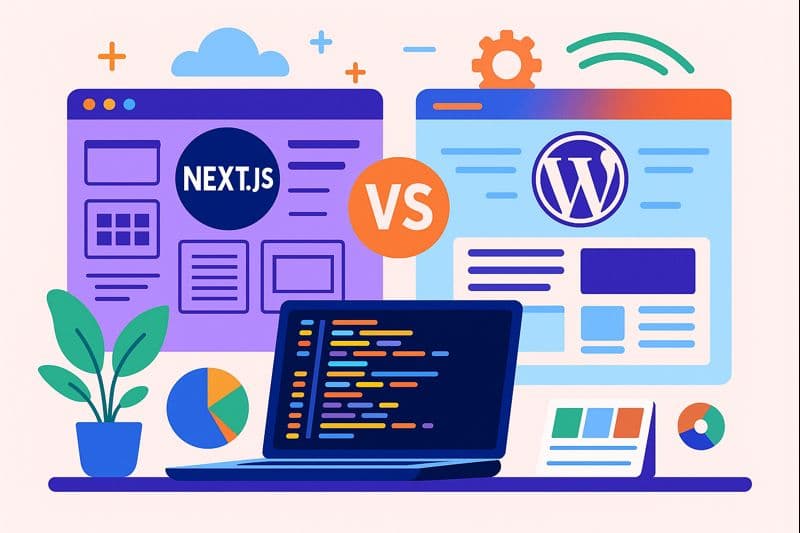
At Softvia, we use Next.js because it gives us the performance model serious brands actually need: cleaner rendering, better control over delivery, and a modern foundation for SEO, storefront speed, and scale.
That matters because a fast site is not the result of one plugin or one optimization sprint. It comes from architectural choices made correctly from the start.
If your current site is holding back conversion, organic growth, or paid efficiency, the solution is rarely another patch. It is a better delivery system. That is what modern web infrastructure is supposed to do: remove drag and let the business move at full speed.
Was this useful?
Share it with your network so more operators and builders can benefit from it.
Related Articles
Template Systems vs Custom Software: Which Is the Better Investment?
Template-based systems often look cheaper at the start, but hidden costs show up in performance, security, flexibility, and future rework. The right decision depends on whether you are buying a quick website or building a real business asset.
Stay close to Softvia
Be the first to hear when we publish new essays on performance, SEO, and modern web infrastructure.